The Beautiful Ugly of Silicon Dreams
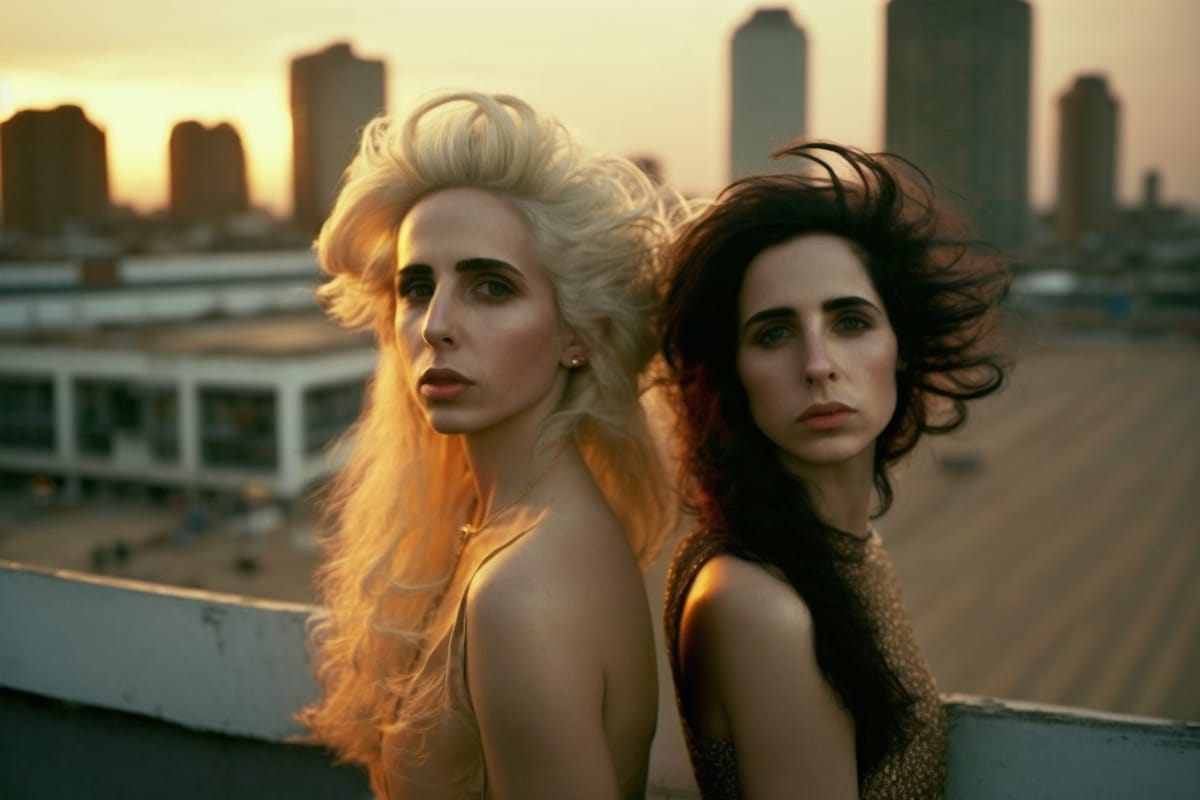
Two years into the AI revolution.
The first time was magical. A conversation with a machine that didn't just respond but understood, that remembered context and spoke with something approximating warmth. Then came the images, sublime visions conjured from nothing but text, digital paintings that seemed to capture something ineffable about beauty itself. This was two years ago, when artificial intelligence felt like witnessing a new dawn break over the horizon of human possibility.
Now it's daylight, and we can finally see what we've created.
The fascination hasn't disappeared entirely. But it's changed, acquiring an aftertaste that grows stronger with each passing week. Those AI generated images that once mesmerized now carry a peculiar taint, an uncanny wrongness that's difficult to articulate but impossible to ignore once you've noticed it. Like the faint smell of machine oil on something that should be organic, it marks these creations as fundamentally other.
The Flood
Scroll through any social media feed today and you'll encounter it: an endless deluge of machine made content, increasingly sophisticated, increasingly indistinguishable from human creation. It's becoming the new baseline reality. I keep wondering who benefits from this transformation? Who's driving the relentless push to replace authentic human expression with algorithmically generated hallucinations? The question isn't whether we can create these things. Clearly, we can. The question is whether we should, and what we lose when we do.
Is a video of a cat falling off a chair still charming when that moment was never captured, when no cat ever fell? Can we genuinely connect with an influencer's lifestyle when not only is that lifestyle fictional, but the person themselves has never drawn breath?
Even Spotify now hosts thousands of AI generated tracks and they're thousands more added every day.
Some don't seem to care, as long as the dopamine hits keep coming. But for others, including myself, the effect is hollowing. Each AI generated post, each synthetic moment of manufactured emotion, leaves behind a residue of emptiness, a sense of being manipulated and used. There's resistance, of course. Comment sections fill with "AI bullshit" memes wherever the artifice is still detectable. But that window is closing. Soon enough, we won't be able to tell the difference at all.
The Economics of Replacement
Set aside the philosophical concerns for a moment and consider the raw economics. The major AI companies are burning through billions, budgets that rival the GDP of small nations. They're lobbying to restart nuclear power plants to feed data centers the size of small cities. The monetization strategy isn't fully formed yet, but the investment continues, relentless as a tide.
These systems have consumed the entire Internet. Every book ever digitized, every song ever recorded, every photograph ever uploaded, all of it ingested, processed, analyzed. The machines have studied humanity's creative output with an attention to detail no human could match.
Give an AI ten songs by any artist, and it can generate the eleventh. Provide it a novelist's complete works, and it will write a convincing sequel. Some argue that true artists reinvent themselves with each creation, doing something machines cannot replicate. But The Beatles reinvented themselves perhaps once or twice in their career, not with every single track. Having a signature style isn't a weakness. It's what makes an artist recognizable. And it's precisely what makes them vulnerable to AI replication.
The Great Transfer
This is where we arrive at the crux of the matter. The creative economy, the ecosystem that has sustained photographers, designers, composers, writers, and countless other artists, is being systematically redirected toward AI companies. The machines are positioning themselves as the new creators, and the real ones are being edged out of their livelihoods. Why hire a photographer when a subscription to an image generator costs less? Why commission a composer when an AI can produce royalty free music on demand?
This isn't a moral argument about the rightness or wrongness of technological progress. History is full of such transitions. The automobile made horses largely obsolete for transportation. Industries evolve, disruption happens, creative destruction is capitalism's signature move.
But here's what should concern us: When these machines were trained on my music, on your writing, on everyone's creative output, when they absorbed and analyzed the work of millions of human creators, they weren't granted the right to repackage and sell it. Yet that's exactly what's happening. The head of GEMA, Germany's music rights organization, recently asked an AI music platform to create a song about 99 red balloons. The result was, unsurprisingly, a clear derivative of Nena's iconic hit.
Now we understand why certain ultra wealthy tech leaders and radical politicians are calling for the abolition of intellectual property law. It's the last legal barrier standing between them and total market capture.
Brave New World
Can this be stopped? The honest answer is probably not. Too much capital has been deployed, too much political influence accumulated. The momentum may be unstoppable.
So imagine the destination. A world where films feature no human actors, where stories are algorithmically tailored to your individual preference profile, analyzed and stored by platforms that know you better than you know yourself. Where music becomes an infinite stream of sounds calibrated to your current emotional state, measured in real time by your smartwatch. Where every moment of interest, every potential purchase, is curated by systems optimized for engagement and conversion.
In this world, all those people who spent years or even decades refining their talents, mastering their crafts through sweat and tears and passion, are simply gone. Their skills, their perspectives, their irreplaceable human experiences will be deprecated.
The fascination remains, tinged now with something closer to unease. The dawn has broken, and in the clear light of day, the beautiful and the ugly have become impossible to separate. We're left with a question: In our rush to create machines that can do everything humans can do, will we want to live in the world they create?
The artificial intelligence revolution is here. The question is no longer whether it will transform creative industries. It already has. The question is whether we'll recognize what we've lost by the time it's too late to get it back.